How to Write Creative Prompts That Leave Room to Make
Write creative prompts that give a blank page a clear starting point while leaving room for surprising choices across writing, drawing and materials.
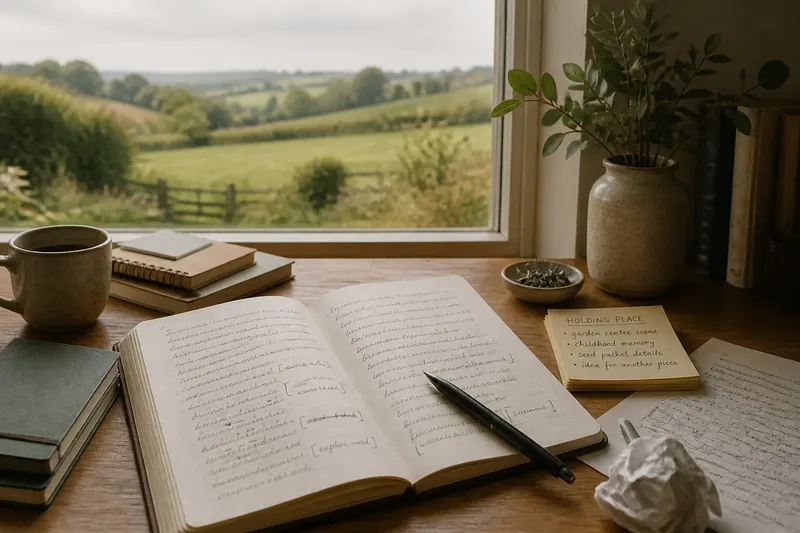
A blank sketchbook can make a willing maker hesitate. A creative prompt gives the first mark somewhere to begin: a folded envelope, a half-heard phrase or a question about an empty chair. The best prompts offer enough direction to start, but leave the maker free to decide what the work becomes.
That balance matters in solo practice and shared sessions alike. A prompt can focus attention, invite different interpretations and make a creative session easier to enter without turning it into a task with one correct answer.
How does a creative prompt focus attention?
A creative session offers too many choices at once: subject, medium, mood, scale and method. “Make something” leaves every choice open. “Make a mark that suggests weather” gives attention a place to land while keeping the materials and final image undecided.
A useful constraint narrows the field without closing it. It might name a material, such as torn paper, or a relationship, such as the distance between two voices. The prompt shapes a first move, not the whole route.
Think of it as a doorframe rather than a corridor. It marks an entrance; the maker chooses where to go.
Why use the same prompt with a group?
In a writing circle, classroom or casual session with friends, one invitation gives everyone a shared starting point. The results need not resemble one another. Their differences become easier to discuss because each person has responded to a related idea.
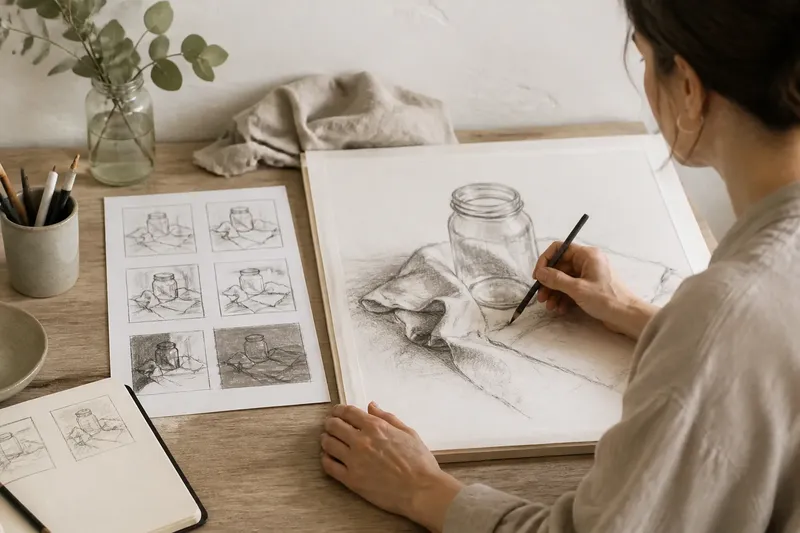
For instance, “show a place through what has been left behind” might lead one person to write about a room, another to draw discarded objects in charcoal, and someone else to arrange found materials. The prompt supplies a common thread, while each maker brings their own associations.
It also gives a group a more specific way to talk about the work. People can discuss which parts of the prompt they followed, changed or set aside, rather than judging a piece as simply good or bad.
What makes a constraint useful?
A constraint helps when it creates a choice. “Make a portrait using only circles” sets a clear boundary, yet the maker still chooses whom or what to portray, how the circles describe character, and whether the result feels playful or unsettling.
A prompt that dictates the subject, tone, format and ending can leave little room for those decisions. Before keeping a requirement, ask what choice it gives the maker. If the answer is “none”, loosen the wording or remove it.
One strong boundary often gives the imagination more to work with than a long list of rules.
How can open language stay clear?
Words with several meanings can invite interpretation. “Carry” might mean holding an object, bearing a responsibility or transporting a sound. A maker can choose one sense or let several overlap.
Open language is not the same as vagueness. “Make something interesting” gives little to respond to. “Show what a room remembers” supplies an image and a question, but leaves the answer’s form to the maker.
Give the prompt enough texture to spark an association, then leave that association in the maker’s hands.
How can a material shape the prompt?
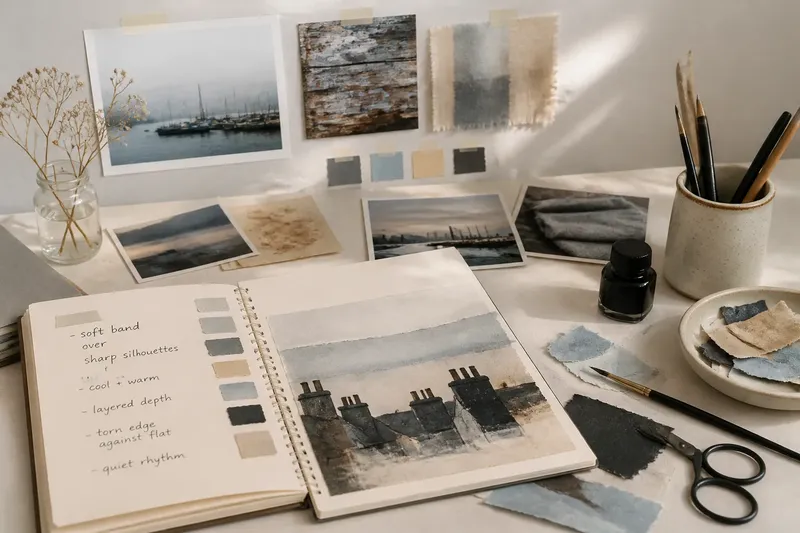
A prompt can begin with a material rather than a theme. Watercolour, graphite, masking tape and fabric each offer different surfaces and marks. Naming one can invite a maker to notice what is already available instead of reaching first for a familiar subject.
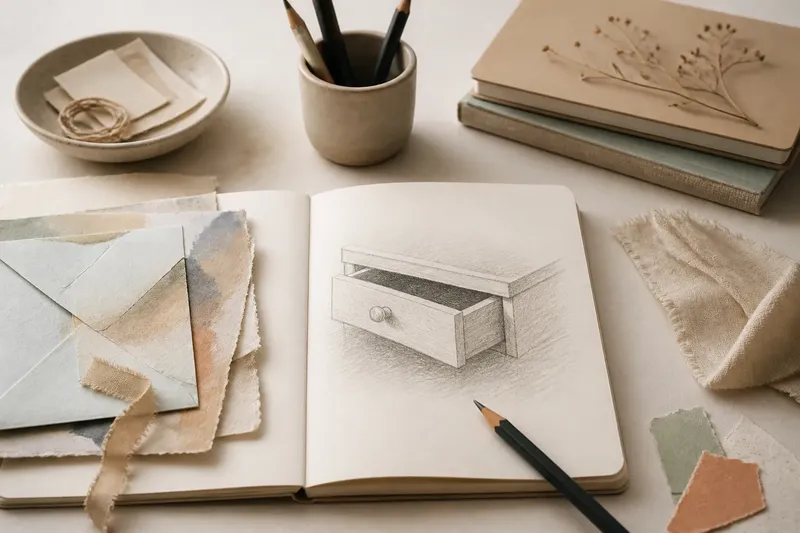
Say you have a small pile of envelopes, a pencil and a sheet of card. You write, “Use an envelope’s folds to suggest a route.” First, you trace a fold with the pencil. Next, you decide whether the line is a map, a path through a story or part of a folded paper object. The result is a visible starting line, while the choice of medium and meaning stays open. These materials and actions are invented for this example.
Name materials as invitations, not as a shopping list. If a maker can substitute a similar object without losing the central idea, the prompt is likely flexible enough.
What questions help shape a creative prompt?
How specific should a creative prompt be?
Give it one clear anchor, such as a place, action, material or relationship. Leave the medium or interpretation open unless choosing one is part of the exercise.
Can a prompt be a question?
Yes. “What would this doorway keep out?” sets up a situation without giving its answer. Questions work best when they invite making as well as reflection.
How is a prompt different from an instruction?
An instruction usually specifies an action or result, while a prompt offers a starting condition. A prompt can include an action, but should leave meaningful choices to the maker.
How can I tell if a prompt is too vague?
If it is hard to name a first action, add a concrete detail. Replace “make something about change” with an image or action that gives change a visible foothold.
How do you draft and refine a prompt?
Start with something observable, add a tension or question, then check whether the wording leaves a real choice. Use this list to decide what to change:
- Check the source: If you can name a visible or sensory detail, keep it as the anchor; if not, replace a broad theme with an object, place or sound.
- Check the tension: If a question or contrast gives the anchor a second meaning, keep it; if it only repeats the subject, add a relationship such as inside and outside.
- Check the length: If the sentence can be read easily in one breath, keep it; if it contains backstory or several clauses, remove details that do not help someone begin.
- Check the open choice: If the maker can still choose a medium, point of view or mood, keep that freedom; if every choice is prescribed, remove a requirement.
- Check the first action: If you can name a mark, sentence or arrangement to try, keep the prompt; if not, add a specific starting action or image.
- Check for alternatives: If you can imagine two different responses, keep the wording; if only one answer seems possible, loosen the instruction or change its focus.
Imagine you are drafting a prompt for an invented group session. Your starting inputs are a half-open drawer, a pencil and a sheet of paper; the first draft is “Draw a secret object hidden in a drawer.” First, you notice that this sets both the medium and subject, so you change it to “What is a half-open drawer keeping out of sight?” Next, you check the first action: someone could sketch the gap, write about an absent object or fold paper into a closed shape. Finally, you check for alternatives and decide to keep the revised wording because those responses begin from the same image but lead in different directions. The trade-off is clear: the original is easier to follow literally, while the revision leaves more creative choices open. These inputs and outcomes are invented for illustration.
Keep the finished prompt short enough to remember. A phrase beside a sketchbook or on a scrap of paper is easy to return to without turning the invitation into a brief about what the work should mean.
When should a maker leave the prompt behind?
A prompt is a beginning, not a contract. During the work, a maker may discover that the liveliest idea sits outside the original wording. The prompt has still served its purpose if it helped attention settle long enough for that discovery.
When sharing creative prompts, say plainly that people can interpret them differently. For your own practice, write the words where you can see them, then let the work answer in its own language. A prompt can leave a trace in the finished piece without deciding what that piece must be.