A Small Show-and-Tell for Work in Progress
A small show-and-tell for work in progress helps you share one unfinished piece, ask for the response you need and keep feedback useful and kind.

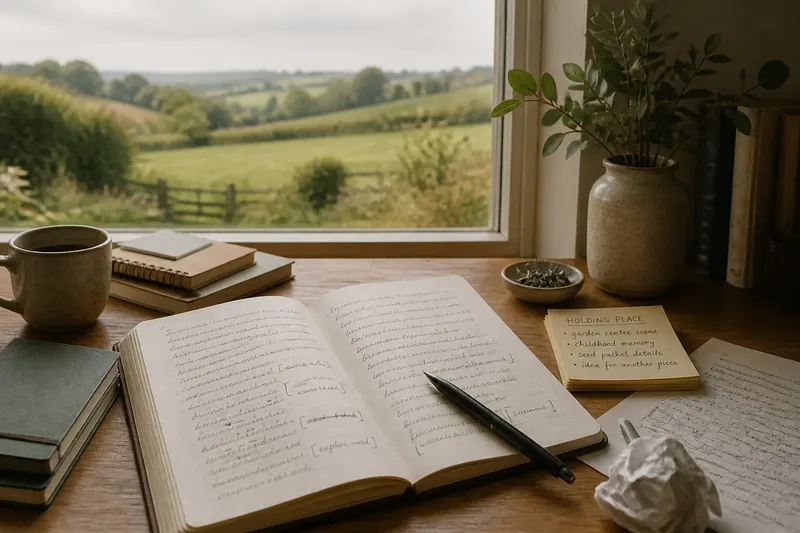
You have a half-finished piece open on the table and a friend asks how it is going. A small show-and-tell for work in progress can turn that awkward question into a useful conversation: choose one piece, say what kind of response you want, and agree how much feedback is helpful.
This is not a presentation or a verdict on whether the work is good. It is a short, bounded chance to let someone see what you are making while it is still possible to change. A week gives you enough time to prepare without polishing the work into something you are no longer ready to discuss.
What is this small show-and-tell for?
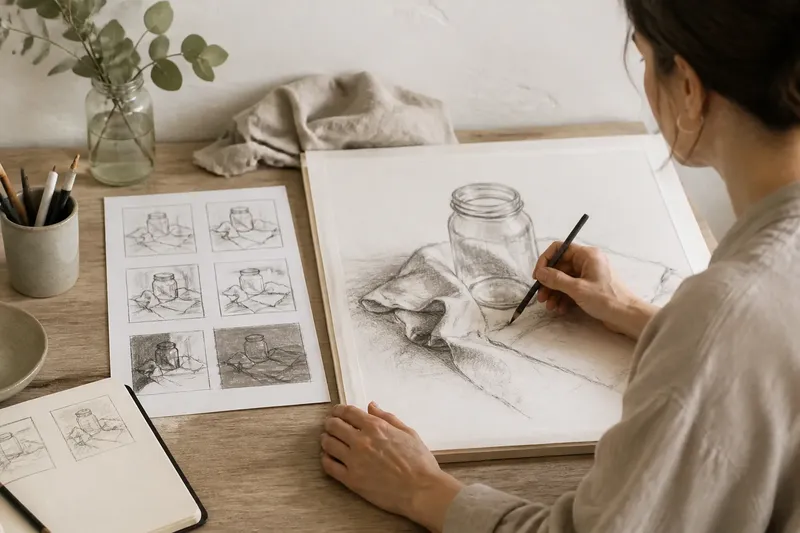
Set a modest purpose before you invite anyone. Perhaps you want to know whether the opening of a story is clear, whether a collage feels crowded, or which of two colour directions reads more strongly. One session should serve one main question.
Keep the group small enough that every person can respond without turning the gathering into a panel. One or two trusted people may be plenty. Choose people who can respect a boundary and who are able to describe what they notice, rather than rushing to prescribe a solution.
Decide on a setting that suits the work. A kitchen table can hold a printed draft, a sketchbook, or a small object; a video call may suit a digital image or a piece of writing. If the work is private, choose a person and format that feel appropriate, and share only what you are comfortable showing.
How do you prepare across a week?
Several days before: choose one piece and identify the decision you are trying to make. Do not select a whole collection if one page, scene, photograph, or material study can carry the question. Mark the exact passage or area you want people to attend to.
Write a plain-language request. “Tell me what you think” leaves the other person guessing. “Read the first page and tell me where your attention drifts” gives them a useful task. For image-making, you might ask what the eye notices first; for a textile sample, you might ask which texture feels most in keeping with the mood.
The day before: prepare only what people need to see. Print the page, export the image, or lay out the relevant samples. Check that text is legible and that a digital file opens. You do not need a slide deck, artist statement, or polished explanation. Keep a notebook nearby so you can record comments without having to answer every one.
On the day: send a brief reminder with the time, the work’s rough state, and your request. Give people a chance to decline or arrive late without making the session feel like an obligation. A short conversation can fit into an ordinary evening; agree a finish time before you begin.
How should you frame the work?
Start by naming what the piece is and where it sits in your process. Then state the specific response you want and any area you do not want discussed. You might say, “This is an early draft. I want to know whether the character’s choice makes sense; I’m not looking for line edits today.”
That framing is not an apology. Avoid a long list of reasons the work is unfinished, which can accidentally invite reassurance instead of useful attention. A simple note about what is still open gives people context without telling them what to think.
Say how you would like comments delivered. You may prefer listeners to describe their experience before offering suggestions, or to ask questions rather than propose fixes. These are requests, not rules everyone will intuit. State them kindly and clearly at the start.
How do you keep feedback within useful limits?
Choose a limit that protects the session’s purpose. You can ask each person for one observation and one question, or give everyone a turn to speak before anyone responds again. If the group is larger, take comments in writing and read them after the meeting rather than opening a free-for-all.
Say what is out of scope: perhaps no spelling corrections, no guesses about the person behind the work, or no suggestions for changing the whole concept. If someone moves beyond your request, you can redirect them: “Could you stay with what you noticed in the ending?” You do not have to defend the boundary or explain it repeatedly.
Imagine you have brought a rough ink-and-paper poster to two friends because you are unsure whether its main message is easy to spot. You ask each person to name the first thing they notice and one place their eye gets stuck, while explaining that you are not seeking new slogans. They describe where they look first and point to a crowded corner; you leave with observations to consider, not an instruction to redesign the poster.
Keep a little space at the end for your own response. Thank people, note what you heard, and let them know whether you want to discuss possible changes now or later. If you feel flooded, it is fine to stop collecting comments and return to them when you are ready.
What can people ask about this kind of sharing?
How finished should work in progress be?
It should be complete enough for someone to encounter the part you want to discuss, but it need not be polished. Choose a sample that makes your question visible without presenting more material than the session can hold.
What if I do not know what response I want?
Describe the decision you are facing, even if you cannot yet name the answer. You might ask what feels confusing, compelling, or unresolved, then decide afterwards whether those reactions help.
What if feedback feels uncomfortable?
Pause and restate your request, or end the discussion early. You can also listen without responding to every suggestion; taking notes does not commit you to making a change.
Can a show-and-tell happen online?
Yes, if the work can be shared clearly and the group knows how to take turns. Send only the relevant file or excerpt, and make sure everyone understands whether the material is private.
What do you do after everyone leaves?
Do not revise while the comments are still arriving in your head. Read your notes later and sort them into what several people independently noticed, what one person observed, and what is a proposed solution. Repeated reactions may deserve attention, but they are still information to weigh against your own intention.
Choose one next action that belongs to you: clarify a sentence, test a different crop, move a piece of paper, or leave the work untouched until you can see it afresh. If a comment does not fit the project, set it aside without treating the person or the work as wrong.
For your next small show-and-tell for work in progress, keep the same useful boundary: one piece, one clear request, and a defined amount of feedback. The session has done its job when you can return to the work with a more precise question or a sensible next move—not when everyone agrees on what it should become.